Growing a business usually means taking on more. More customers, more projects, more opportunities, and, ideally, more revenue. You get the drill.
But growth also brings a familiar challenge: your marketing needs to grow with you.
Maybe you’re trying to keep up with social media, update your website, publish blog posts, send emails, improve your search rankings, and figure out why your latest campaign isn’t delivering the results you expected. You know marketing matters, but finding the time, talent, and resources to manage it all is another story.
That’s when many business owners start asking an important question: Should we build an in-house marketing team or outsource our marketing to an agency?
The right answer depends on your business goals, budget, and available resources. However, in-house vs. outsourced marketing isn’t just a question of who does the work. It’s about finding the right combination of expertise, efficiency, and investment to support sustainable growth.
Let’s break down the differences and explore which approach makes the most sense for your business.
Cost: What Are You Really Paying For?

When comparing in-house and outsourced marketing, cost is often the first consideration. At first glance, hiring an employee might seem more affordable than partnering with a marketing agency. After all, you’re paying one salary instead of a monthly agency fee.
But the full picture is a little more complicated.
The Cost of In-House Marketing
Building an internal marketing team involves more than a paycheck. Depending on the role and your location, you’ll need to account for:
- Salary and benefits: Health insurance, paid time off, retirement contributions, and payroll taxes add to the cost of employment.
- Recruiting and onboarding: Finding the right person takes time, and getting them up to speed requires additional resources.
- Marketing tools and technology: Your team may need subscriptions for email marketing, social media management, analytics, design, automation, and other platforms.
- Training and professional development: Marketing changes constantly. Keeping your team current requires an ongoing investment in skills and knowledge.
- Additional hires: One marketing employee rarely has expertise in every area your business needs. As your marketing grows, you may need to expand the team.
A talented marketing generalist can be incredibly valuable, but one person can’t always be a strategist, copywriter, designer, SEO specialist, paid advertising expert, and marketing automation pro all at once.
You may eventually find yourself hiring more people just to cover the gaps.
The Cost of Outsourced Marketing
Outsourcing marketing gives you access to external expertise without taking on the full cost of building an internal department.
Instead of recruiting multiple specialists, managing benefits, and purchasing every tool independently, you work with an agency that can provide the services your business needs.
Depending on the agency and scope of work, that might include strategy, content creation, website optimization, social media, email campaigns, SEO, and marketing automation.
You also have more flexibility to adjust your level of support as your business evolves.
For small and midsize businesses, this can make a significant difference. You can invest in professional marketing without immediately committing to multiple full-time salaries.
The bottom line: In-house marketing may make sense when you have enough consistent work to support dedicated employees. Outsourcing can be a more practical investment when you need a broader range of skills but aren’t ready to build a full department.
The goal isn’t necessarily to spend less on marketing. It’s to get more value from what you spend.
Efficiency: Who Has the Time and Expertise to Get It Done?

Cost matters, but so does the ability to execute.
You can have a great marketing strategy on paper, but it won’t do much for your business if nobody has the time or resources to put it into action.
This is where the differences between in-house and outsourced marketing become especially noticeable.
In-House Marketing Offers Direct Control
An internal team works closely with your employees, understands your day-to-day operations, and can respond quickly to changing priorities.
Because they’re immersed in your business, in-house marketers can develop a strong understanding of your products, customers, and company culture.
That familiarity is valuable. However, it doesn’t automatically solve the workload problem.
Your marketing employee may also be pulled into sales meetings, internal projects, customer requests, and last-minute assignments. Strategic work gets pushed aside, and important initiatives end up on the back burner.
Sound familiar?
When marketing depends on one person squeezing everything into an already packed schedule, consistency becomes difficult.
Outsourced Marketing Expands Your Capacity
An agency brings additional capacity and specialized skills to your business. Rather than asking one employee to handle every marketing task, you can work with a team that divides responsibilities according to its expertise.
That means your SEO specialist can focus on search visibility while your content team develops messaging that speaks to your audience. Your marketing strategy can connect those efforts instead of leaving every channel to operate independently.
An experienced agency can also help you identify opportunities to streamline repetitive tasks through marketing automation.
For example, automated email follow-ups, lead nurturing workflows, and organized campaign processes can reduce manual work while helping your business stay connected with prospective customers.
The result? Your marketing becomes more manageable, your efforts become more consistent, and your internal team can focus on the responsibilities that require their attention.
What About Hiring a Freelancer?
Freelancers can be a great option when you need help with a specific project or skill. If you need a website refresh, a batch of blog posts, or occasional graphic design, a freelancer may be exactly what you need.
However, freelancers typically focus on the scope of work you hire them to complete. You’ll still need someone to coordinate projects, connect the dots between marketing channels, and make sure everything supports your broader business goals.
An agency can offer a more integrated approach, depending on its services and structure.
The bottom line: If your biggest challenge is a lack of time, expertise, or coordination, outsourcing can help you expand your marketing capacity without adding another layer of internal management.
You don’t have to do everything yourself to stay in control of your business.
ROI: Which Approach Helps You Get Better Results?

Ultimately, marketing should contribute to your business goals. That might mean generating qualified leads, increasing sales, improving customer retention, building brand awareness, or creating a more predictable path to growth.
But how do you determine whether your marketing investment is paying off?
Start by looking beyond the price tag.
In-House Marketing and ROI
An internal team can deliver excellent results when it has the right people, tools, strategy, and resources.
Your employees understand your business firsthand, and having marketers on staff can make collaboration easier. If your company has ongoing, specialized marketing needs, a dedicated team may be a worthwhile long-term investment.
The challenge is making sure that team has everything it needs to succeed.
If employees are stretched too thin, lack specialized skills, or spend most of their time on low-impact tasks, your business may not get the return it expected.
You might be spending money on marketing without having the right reporting, strategy, or processes in place to understand what’s working.
Hiring someone to manage marketing doesn’t automatically create a marketing system that delivers results.
Outsourced Marketing and ROI
A strong agency relationship starts with understanding your business objectives and building a marketing strategy around them.
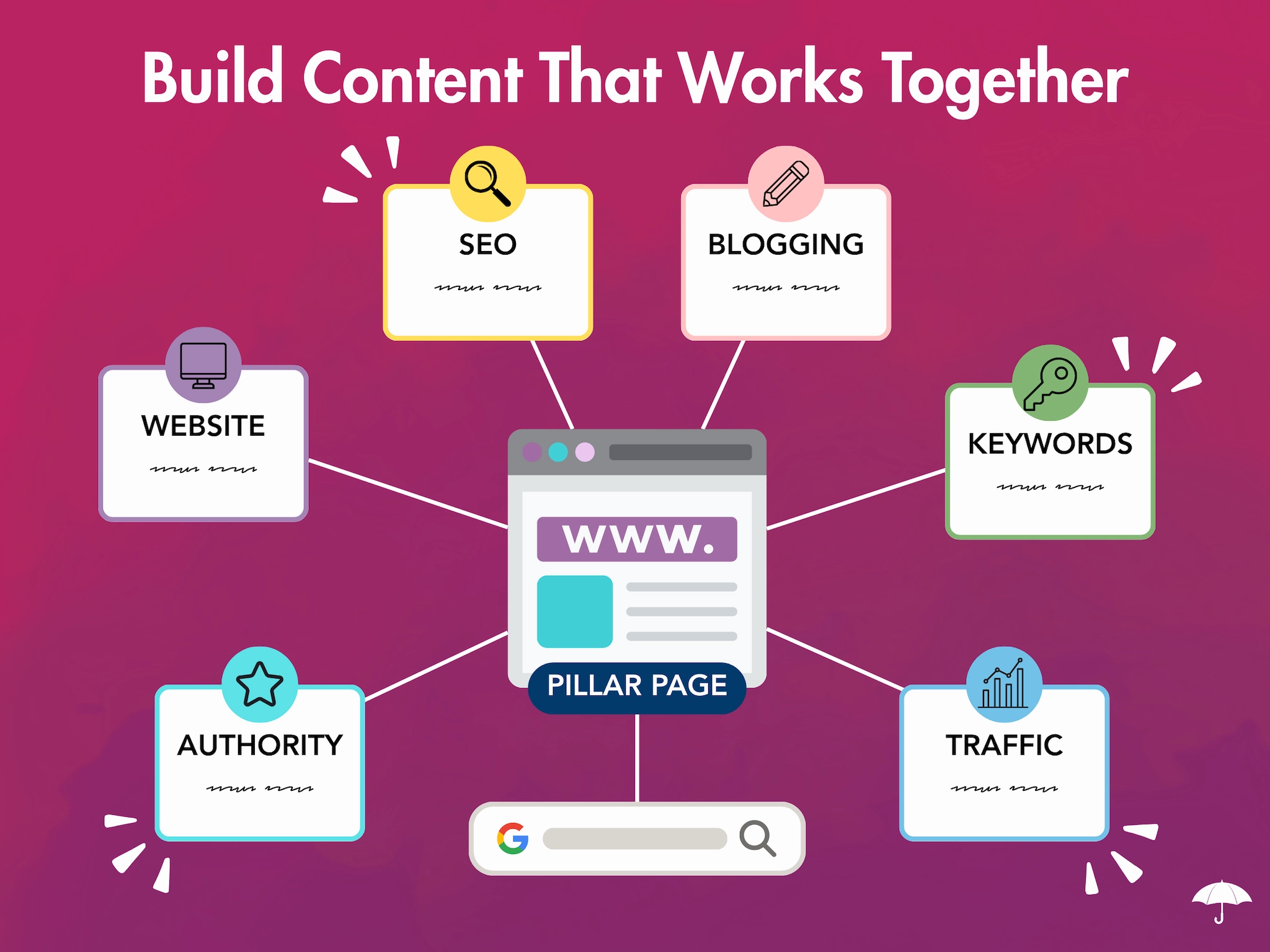
Rather than treating every marketing channel as a separate task, an agency can help connect your website, content, social media, email marketing, SEO, and automation efforts into a more cohesive plan.
That coordination matters.
A blog post can support search visibility and direct readers to a relevant service page. An email campaign can nurture leads who aren’t ready to buy. An automated follow-up can help your team respond to inquiries more consistently.
Each effort has a purpose, and the results can inform what you do next.
An agency can also bring experience from working across different industries and business challenges. That outside perspective may help you spot opportunities, avoid common mistakes, and make more informed decisions about where to invest your marketing budget.
Of course, outsourcing doesn’t guarantee better results. ROI depends on the quality of the strategy, execution, communication, and measurement, as well as factors such as your market, offer, and sales process.
That’s why it’s important to work with a partner who understands your goals, communicates clearly, and measures progress against meaningful business outcomes.
The bottom line: The best marketing investment isn’t necessarily the one with the lowest monthly cost. It’s the one that helps your business make measurable progress toward its goals.
In-House vs. Outsourced Marketing: Which Is Right for Your Business?
There’s no universal answer. The best marketing management model depends on where your business is today and where you want it to go.
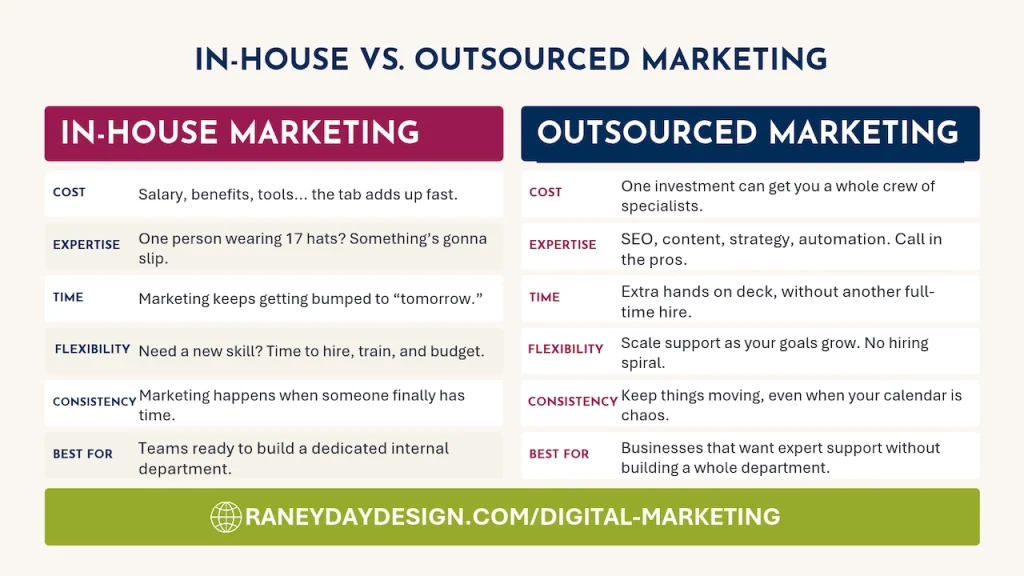
Here’s a quick comparison:
When Should You Hire In-House?
An internal marketing team may be the right choice if:
- Your business has enough ongoing marketing work to support dedicated employees.
- Your marketing requires extensive daily collaboration with internal departments.
- You have the budget to hire and retain the skills you need.
- You want direct oversight of day-to-day marketing operations.
When Should You Outsource Your Marketing?
Partnering with an agency may be a better fit if:
- Your marketing needs have outgrown what you or your current team can handle.
- You need several specialized skills but can’t justify hiring multiple employees.
- Your marketing efforts feel scattered, inconsistent, or disconnected.
- You’re spending too much time managing marketing instead of running your business.
- You want a more strategic approach to growth without building an entire department.
You Don’t Have to Choose One or the Other
Who says you have to choose between an in-house team and an outsourced marketing agency?
For many growing businesses, the smartest approach is a combination of both.
You might have an internal marketing coordinator who understands your brand, works closely with your sales team, and manages day-to-day priorities. But when it comes to SEO, content creation, website optimization, or marketing automation, bringing in an agency can provide the specialized expertise and extra capacity your business needs.
Instead of expecting one employee to master every marketing discipline, you can let your internal team focus on what they do best while an agency helps execute your broader strategy.
It’s also a way to scale your marketing without scaling your payroll at the same pace. As your business grows, you can adjust your agency support to match your goals and needs.
The goal isn’t to build the biggest marketing team. It’s to build the right team for where your business is going.
Ready to Grow Without Adding More to Your Plate?
Growth should create new opportunities for your business, not leave you buried under an ever-expanding to-do list.
If your marketing needs are growing faster than your team’s capacity, it may be time to rethink how you’re managing it.
At Raney Day Design, we help businesses bring more strategy, structure, and consistency to their marketing. From content and digital strategy to website support and marketing automation, we help connect the pieces so your marketing can work toward your business goals.
You don’t have to hire an entire marketing department to get the support you need. And you don’t have to keep trying to squeeze marketing into the margins of your workday.
Sometimes, the smartest growth decision is knowing when to bring in the right partner.
Ready to explore what outsourced marketing could look like for your business? Let’s talk about your marketing goals.
Let’s build a marketing approach that supports your growth without making your workload unmanageable.