For many small business owners, AI doesn’t feel like an opportunity — it feels like homework.
You’re already juggling emails, customer service, marketing, scheduling, invoices, and a hundred other things! The last thing you need is another technology trend demanding your attention before you’ve finished your morning coffee.
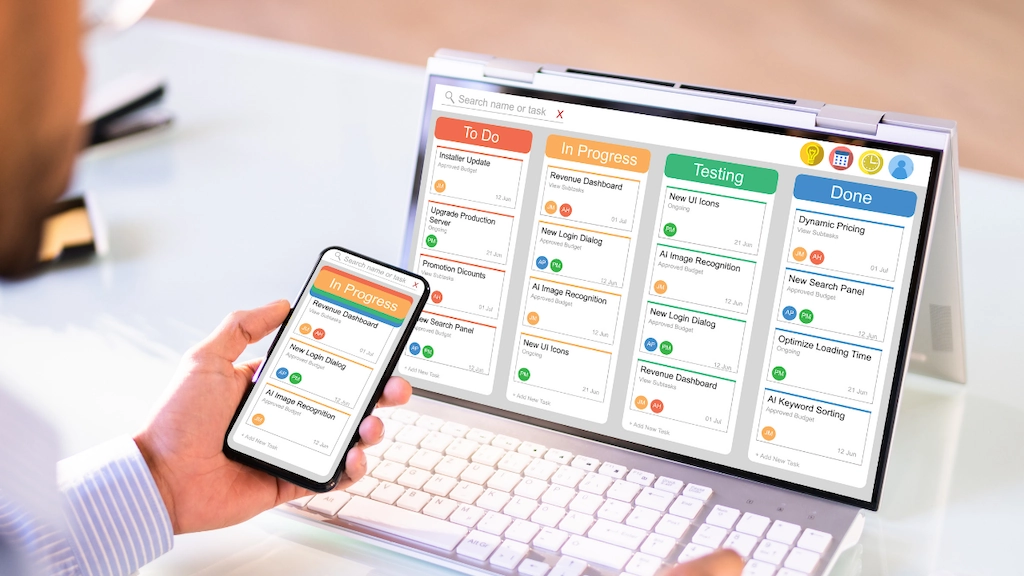
But AI for small business isn’t supposed to be another item on your to-do list. It’s supposed to shrink the list.
You don’t need a software overhaul. You don’t need a tech team. You don’t need to understand how any of it actually works under the hood. What you need are a few well-placed tools that quietly handle the repetitive stuff so you can stay focused on your work!
That’s where AI earns its keep. Not as some sci-fi robot revolution, but as a practical, unglamorous time-saver. The kind that drafts your follow-up email at midnight, answers a customer question while you’re on a job site, or turns a messy list of notes into a polished proposal before your next meeting.
No robot takeover. No technical degree required. But it’s key when designing your website.
So let’s get into what this actually looks like in the real world: the tools real business owners are using, the problems they’re solving, and how to start without feeling like you’re drinking from a firehose.
AI Is a Tool, Not a Business Strategy

Before breaking down all the platforms and automation tools, it’s important to clear something up.
AI is not magic.
It’s not going to instantly fix disorganized systems, bad customer service, inconsistent branding, or a broken business model. And despite some of the dramatic headlines floating around online, AI also isn’t replacing the value of creativity, relationships, or strategic thinking anytime soon.
What it can do is help businesses operate more efficiently.
That’s the real value.
AI can reduce repetitive tasks, improve response times, organize information faster, assist with marketing, streamline scheduling, and support customer communication in ways that save business owners a significant amount of time every week.
And honestly? Time is one of the most expensive things small business owners lose.
Most entrepreneurs aren’t struggling because they lack ideas or ambition. They’re struggling because there are simply not enough hours in the day to do everything manually.
That’s why the smartest businesses in 2026 aren’t necessarily the ones using the most advanced AI systems. They’re the ones using AI intentionally.
Simple systems. Clear purpose. Less unnecessary chaos.
Simple AI Tools Small Businesses Can Actually Use

One reason so many entrepreneurs hesitate to explore AI marketing and automation is because the conversation around it often feels unnecessarily intimidating.
Every platform claims to “revolutionize workflows” and “optimize scalable infrastructure,” which sounds impressive. But what does that even mean?
The reality is much simpler. Many AI-powered tools are designed specifically to help small businesses handle everyday tasks more efficiently.
Our favorite automation tool is Raney Day Connect. It’s the bee’s knees! RDC helps you capture, nurture, and close leads on autopilot through SMS, email, live chat, phone calls, and more! It’s pretty sweet. This platform can do all the things mentioned below. Keep reading to learn.
AI Writing Tools for Content Creation
AI writing assistants have become incredibly popular for content creation. These tools can help brainstorm social media captions, draft blog outlines, write email campaigns, create FAQ sections, or generate product descriptions.
They’re especially helpful for business owners who know what they want to say but get stuck staring at a blinking cursor for thirty minutes first.
And no, the goal isn’t to let AI completely take over your brand voice.
Please don’t do that.
We have all read content that was obviously generated and posted without a human reviewing it. It usually sounds like a motivational speaker trapped inside a customer service chatbot.
The best use of AI writing tools is as a starting point—not the final product. They help eliminate the mental friction that slows content creation down in the first place.
AI Scheduling and Calendar Automation
Scheduling software is another area where AI has become incredibly useful for small businesses.
Instead of endless back-and-forth emails trying to coordinate appointments, AI-powered scheduling systems can automatically sync calendars, manage bookings, send reminders, and even handle rescheduling requests.
It’s one of those small operational improvements that immediately makes daily life less frustrating.
AI Chat Tools for Customer Communication
Customer communication has also improved dramatically through AI chat systems. Modern chatbots are far more advanced than the awkward automated messages businesses used years ago.
Small businesses are now using AI chat features to answer common questions, collect lead information, guide customers through inquiries, and provide support after business hours.
And in a world where customers expect quick responses, that responsiveness matters.
People often contact multiple businesses at once. The company that replies first frequently has a major advantage.
AI Design Tools for Marketing Materials
AI-powered design platforms have also opened the door for small businesses that don’t have full in-house creative teams.
These tools can assist with social graphics, marketing visuals, presentations, and video captions while helping brands maintain a more polished appearance online.
That said, there’s still a difference between using AI to support design and replacing strategic branding altogether. A template can help your business look cleaner, but it can’t replace thoughtful brand strategy or customer experience.
There’s a reason professional design still matters.
What AI for Small Business Actually Looks Like

One of the biggest misconceptions about AI for small business is that it’s only useful for tech companies or large corporations.
In reality, small local businesses are often seeing some of the biggest benefits because they operate with smaller teams, tighter schedules, and less time to waste on repetitive tasks.
AI for Service-Based Businesses
Take a service-based business, for example.
An HVAC company, contractor, electrician, or landscaper may spend hours every week manually responding to quote requests, answering repetitive customer questions, organizing appointments, and following up with leads.
AI can simplify many of those processes.
A chatbot on the website can answer common questions instantly. Automated systems can organize estimate requests. Follow-up emails can be triggered automatically after consultations. Appointment reminders reduce no-shows. Social media captions can be drafted faster, and customer inquiries can be sorted more efficiently.
None of this replaces the business owner.
It simply reduces unnecessary administrative overload.
AI for Retail and Ecommerce Businesses
Retail businesses are also using automation tools and AI in practical ways.
Ecommerce stores can generate product descriptions faster, automate abandoned cart reminders, personalize customer recommendations, and analyze buying behavior more efficiently.
Instead of spending hours manually writing inventory descriptions or sending individual follow-up emails, AI helps streamline the process so business owners can focus more on customer experience and sales.
AI for Healthcare and Wellness Practices
Healthcare and wellness practices are increasingly integrating AI into communication systems as well.
Automated appointment reminders, intake organization, educational content support, and review follow-ups help practices stay more organized while improving patient communication.
And honestly, smoother communication creates a noticeably better customer experience.
People want convenience. They want clarity. They want quick answers. Businesses that consistently provide those things tend to stand out.
AI for Marketing Teams and Content Planning
Even marketing teams are using AI in ways that feel far more practical than flashy.
Small businesses are using AI to help brainstorm blog topics, organize content calendars, draft ad variations, summarize reports, and support SEO planning.
At Raney Day Design, we’ve seen firsthand that most businesses don’t necessarily need more marketing activity.
They need better systems.
That’s the difference.
The Real Cost Benefits of AI

When business owners hear the phrase “AI tools,” they often assume it comes with enterprise-level pricing and complicated setup costs.
Thankfully, that’s not usually the case anymore.
Many AI-powered platforms offer affordable monthly plans, scalable pricing, or even free versions for small businesses just getting started.
AI Saves Time (Which Saves Money)
The biggest financial advantage of AI isn’t necessarily the software cost itself.
It’s the time savings.
Think about how much time gets lost every week to repetitive tasks: responding to the same customer questions, scheduling appointments, organizing inquiries, rewriting emails, drafting captions, or manually managing follow-ups.
Those small tasks add up fast.
Saving even a few hours every week creates a measurable financial impact over time. More importantly, it allows business owners to spend their energy on higher-value work instead of getting buried in administrative clutter.
AI Helps Small Teams Compete More Efficiently
AI also helps small teams operate more competitively.
Years ago, larger companies had major advantages because they could afford bigger marketing departments, customer support teams, and advanced systems. Now, affordable AI marketing platforms and automation tools allow smaller businesses to create smoother customer experiences without dramatically increasing overhead.
That doesn’t mean AI replaces people.
It means small businesses can finally stop doing everything the hard way.
AI Can Help Reduce Burnout
And honestly, burnout reduction matters too.
Entrepreneurs are exhausted. Not because they’re unwilling to work hard, but because many businesses still rely on manual systems that demand constant attention.
AI can’t eliminate stress entirely, but it can reduce repetitive mental overload that slowly drains productivity over time.
That’s a bigger benefit than many people realize.
Mistakes Small Businesses Should Avoid
As useful as AI can be, there are still a few common mistakes small businesses should avoid when implementing new systems and automation tools.
- Trying to automate everything at once
This happens constantly. A business owner watches a few videos, signs up for six different platforms, connects twenty automations, and suddenly nobody knows how anything works anymore. That’s not efficiency—it’s digital chaos. Start small instead. Identify one repetitive task that wastes time, improve that process first, and build from there. - Publishing AI-generated content without editing it
AI can absolutely help create faster drafts and brainstorm ideas, but customers still want authenticity. Businesses built on relationships need personality, perspective, and human connection. If every blog, caption, or email sounds robotic and overly polished, people notice immediately. Raney Day Design’s copywriting team humanizes your content. - Making automation feel cold or frustrating
Automation should improve the customer experience—not create endless loops where customers can’t reach a real person. The best AI systems still feel personal. They simply work more efficiently behind the scenes.
The Future of Small Business Isn’t More Chaos
The businesses that succeed in the coming years probably won’t be the ones chasing every shiny new AI trend online.
They’ll be the ones building smarter systems that genuinely support their operations, customer relationships, and long-term growth.
That’s the real opportunity with AI for small business.
Not replacing people.
Not removing creativity.
Not turning every company into a giant tech startup.
Just helping business owners save time, reduce overwhelm, and operate more effectively.
Because most entrepreneurs don’t need more complexity.
They need breathing room.
They need systems that support growth without requiring them to work around the clock just to keep everything moving.
And honestly? Technology should make running a business feel more manageable—not more exhausting.
At Raney Day Design, we believe the best digital solutions are the ones that make life easier for real business owners. The goal isn’t to overwhelm companies with trendy jargon or complicated systems they’ll never actually use.
It’s to help businesses work smarter, market more effectively, and create better experiences for the people they serve.
And if AI can help make that happen while giving entrepreneurs a little more time back in their day?
That sounds like a pretty smart investment to us.